

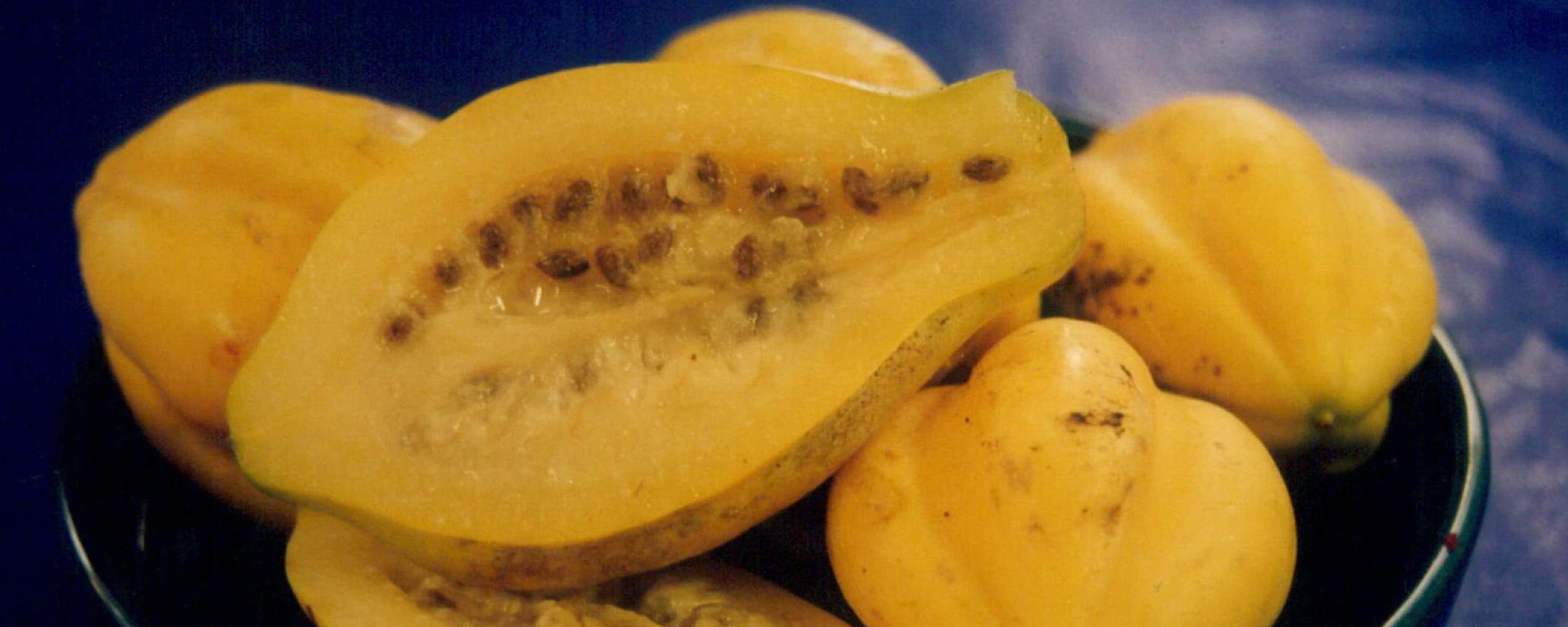
Mountain Paw Paw
-
Landscaping
A highly ornamental sub-tropical plant ideal around the courtyard where the aroma of the fruit can be appreciated. Large distinguished evergreen leaves up to 60cm across and deeply lobed. There is a coating of hairs on the underside of the leaves.
-
Culinary & Nutrition
Mountain Paw Paw can be eaten fresh or cooked, usually baked or boiled. You can also use it as a meat tenderiser. It can be made into desserts, added to ice cream, or savoury dishes, such as soup or stew. The fruit contains vitamins A, B, C and iron.
-
Growing Conditions
Found naturally in shady conditions but performs well in full sun once established (Does well in humid conditions). Protect from wind and frost when young. Not fussy about soil conditions but doesn't like wet feet. A deep fertile free, draining soil is preferred. Mountain Paw Paw is drought tolerant.
Incredible Mountain Paw Paw

Get inspired by homegrown deliciousness






Incredible Experts
Hang out with our experts for a few home-grown tips and tricks.


Mountain Paw Paw has a bright yellow fruit about the size of a small apple but with strongly lobed longitudinal segments. The fruit is formed on new growth and can be eaten as a vegetable or fresh fruit (A ripe fruit contains more vitamins and minerals). Each tree can produce up to 50-60 fruits per season. Harvest is in late winter to early summer when the fruit turns yellow and slightly softens.
Mountain Paw Paw has very few problems. Old trees can be rejuvenated by cutting the trunk back at an angle of 60cm. Mulch the shallow roots and plant two or more to ensure good pollination.
Pollination: Fruit is produced within two years if male and female flowers are present. Male and female flowers may be produced on the same or separate plants. A plant may vary from male to female during the year. Therefore, to ensure pollination plant more than one plant. The white/green waxy flowers are borne in the leaf axils.
Carica pubescens