

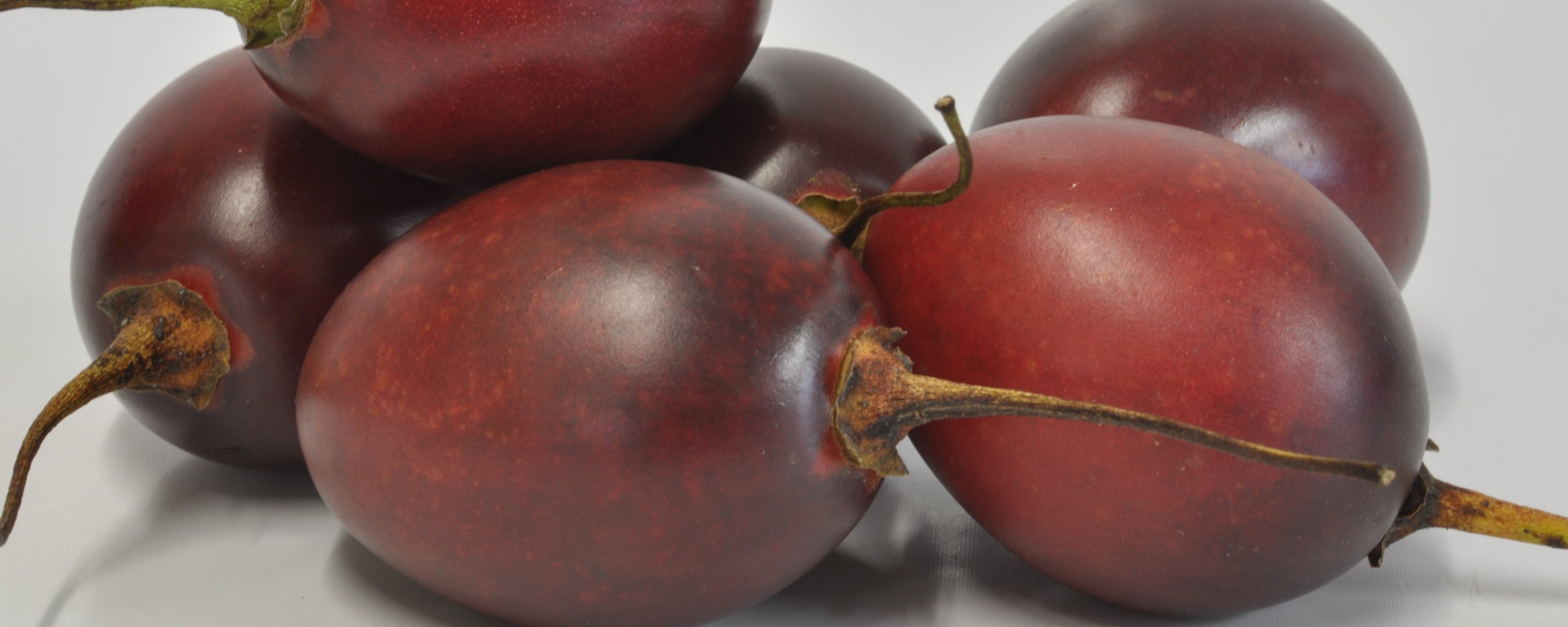
Tamarillos
-
Landscaping
Large sub-tropical leaf form adds interest to any garden. Plant a new Tamarillo every 2-3 years to keep the supply of healthy fruit. Prune hard after the last frost to maximise next season's fruit. Large heart-shaped leaves that are soft and hairy.
-
Culinary & Nutrition
Good source of Vitamin A, B6, C and E. Rich in iron and potassium. Low in calories and high in fibre. Scoop out rich, juicy pulp straight into the mouth or use it in fruit salads, sauces, chutneys or as a meat accompaniment.
-
Growing Conditions
Sunny warm spot, sheltered from heavy winds (not salt tolerant). Tamarillos are frost tender (frost will naturally trim the Tamarillo). Likes lots of water in well-draining soil high in organic matter. Apply blood and bone when planting.
Incredible Tamarillo Varieties

Tamarillo Lairds Large has clusters of pink fragrant flowers followed by large, almost round bright red fruit. Has a tangi acidic flavour and a high yield. Harvest is in autumn - early winter.
Pruning, once your plant reaches 1 metre tall, take the tip out to encourage branching and stop the plant from growing too tall so you cannot reach the fruit. Frosts will naturally prune your tree. After the frosts have passed, remove old and dead wood. In areas with no frosts, you must manually prune back growth to prevent overcrowding. Always remember fruit is formed on the new spring growth. Therefore, a hard prune will maintain the desired shape, size and maximise next season's fruit.
Apply three applications of low nitrogen NPK fertiliser during the growing season. One before pruning, the second one month later and the third in February to help fruit development.
Tamarillos are susceptible to aphids and whitefly, especially when under stress. Spray with an organic insecticide when these insects are present.
Cyphomandra betacea ‘Lairds Large’
Tamarillo Muligan has clusters of pink fragrant flowers followed by medium dark red fruit. The fruit pulp is dark red and has a fully acidic flavour. Harvest is in autumn to early winter.
Pruning, once your plant reaches 1 metre tall, take the tip out to encourage branching and stop the plant from growing too tall so you cannot reach the fruit. Frosts will naturally prune your tree. After the frosts have passed, remove old and dead wood. In areas with no frosts, you must manually prune back growth to prevent overcrowding. Always remember fruit is formed on the new spring growth. Therefore a hard prune will maintain the desired shape, size and maximise next season's fruit.
Apply three applications of low nitrogen NPK fertiliser during the growing season. One before pruning, the second one month later and the third in February to help fruit development.
Tamarillos are susceptible to aphids and whitefly, especially when under stress. Spray with an organic insecticide when these insects are present.
Cyphomandra betacea ‘Muligan’
Tamarillo Tango™ has clusters of pink fragrant flowers followed by medium-sized red/orange fruit. Very sweet with low acidity. Harvest is in autumn - early winter.
Pruning, once your plant reaches 1 metre tall, take the tip out to encourage branching and stop the plant from growing too tall so you cannot reach the fruit. Frosts will naturally prune your tree. After the frosts have passed, remove old and dead wood. In areas with no frosts, you must manually prune back growth to prevent overcrowding. Always remember fruit is formed on the new spring growth. Therefore a hard prune will maintain the desired shape, size and maximise next season's fruit.
Apply three applications of low nitrogen NPK fertiliser during the growing season. One before pruning, the second one month later and the third in February to help fruit development.
Tamarillos are susceptible to aphids and whitefly, especially when under stress. Spray with an organic insecticide when these insects are present.
Produced and Marketed by Tharfield Nursery Ltd in association with Plant & Food Research. Tamarillo Tango™ (‘Cyphomandra betacea Sweeten’) is protected under the New Zealand Plant Variety Act 1987.
Cyphomandra betacea ‘Sweeten’
Get inspired by homegrown deliciousness
Incredible Experts
Hang out with our experts for a few home-grown tips and tricks.


Tamarillo Bold Gold has clusters of pink fragrant flowers followed by large golden fruit, which is sweet and less acidic than the red varieties. Harvest is in autumn to early winter.
Pruning, once your plant reaches 1 metre tall, take the tip out to encourage branching and stop the plant from growing too tall so you cannot reach the fruit. Frosts will naturally prune your tree. After the frosts have passed, remove old and dead wood. In areas with no frosts, you must manually prune back growth to prevent overcrowding. Always remember fruit is formed on the new spring growth. Therefore a hard prune will maintain the desired shape, size and maximise next season's fruit.
Apply three applications of low nitrogen NPK fertiliser during the growing season. One before pruning, the second one month later and the third in February to help fruit development.
Tamarillos are susceptible to aphids and whitefly, especially when under stress. Spray with an organic insecticide when these insects are present.
Cyphomandra betacea ‘Bold Gold’