

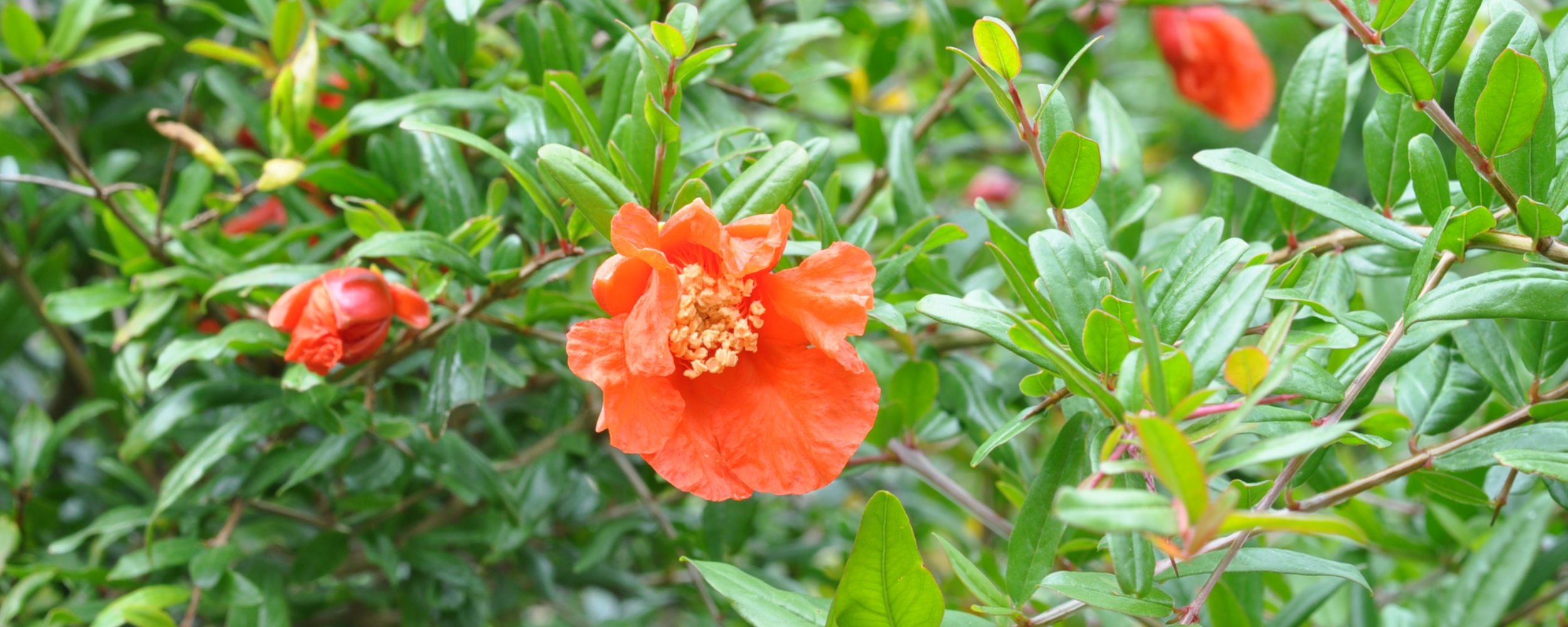
Pomegranates
-
Landscaping
Pomegranates are ideal in containers or as a specimen in the garden. Also, lend themselves to be espaliered.
-
Culinary & Nutrition
Reasonable levels of vitamin C, K and B6, good levels of potassium, copper, pantothenic acid, ellagic acid and flavonoids. Delicious in cool drinks, jellies, sauces, salads and sweet and sour cooking.
-
Growing Conditions
Hot summers and a warm sheltered position will produce the best fruit. Any well-draining soil is suitable for Pomegranates. They are hardy and frost tolerant (as it is deciduous) and require good moisture during late summer to late autumn to ensure good fruit development.
Incredible Pomegranate Varieties

Get inspired by homegrown deliciousness
Get Inspired






Incredible Experts
Hang out with our experts for a few home-grown tips and tricks.
Featured


Eversweet has large, showy orange-red flowers, flowering over a long period from late spring through summer. Followed by red fruit with very sweet clear juice, and virtually seedless. Immature fruit is also very sweet. Harvest in late autumn/early winter (5-7 months after flowering). The fruit will not ripen after harvest.
A deciduous tree-shrub, relatively slow growing but long-lived. Responses well to trimming (after harvesting), also ideal to be containerised. Fruits on new season’s growth. Apply regular general fertiliser to get established.
Punica granatum ‘Eversweet’